Radio frequency signals carry data in wireless networks, radios, medical devices, and countless electronic systems. Unwanted RF energy can interfere with communications, distort measurements, and reduce signal reliability. RF shielding reduces electromagnetic interference by blocking or weakening these stray signals, so sensitive equipment keeps working as designed.
What Is RF Shielding?
RF shielding uses conductive materials and, in some applications, specially designed materials and structures to reduce the transmission of radio frequency electromagnetic energy. A shield reflects some of the energy and absorbs the rest, in proportions that depend on material, frequency, thickness, and design. Effective RF shielding can control electromagnetic energy entering or leaving an enclosure.
It keeps outside interference away from sensitive electronics and limits emissions from the equipment itself. Effectiveness depends heavily on enclosure design, seams, openings, grounding where required, and cable entry points, because any gap lets energy leak.
Types of RF Shielding
- Metal RF shielding: Copper, aluminum, and steel form enclosures, panels, and barriers.
- RF shielding enclosures: Shielded cabinets, equipment housings, and rooms reduce RF signal transmission.
- RF shielding films and foils: Thin layers fit electronic devices, displays, and compact assemblies.
- Conductive coatings and gaskets: These improve shielding continuity around surfaces, joints, and openings.
Operating frequency, required shielding effectiveness, available space, installation method, and environmental conditions determine the appropriate shielding solution.
Key Benefits of Radio Frequency Shielding
- Reduced electromagnetic interference: Shielding limits unwanted RF energy reaching electronic circuits.
- Improved equipment reliability: Less interference supports consistent operation of sensitive equipment.
- Signal integrity: Suitable shielding reduces unwanted coupling between nearby systems.
- Protection of sensitive components: It matters wherever electronic performance is critical.
- Regulatory compliance support: Shielding can help equipment meet electromagnetic compatibility requirements, though compliance depends on the complete system and testing.
Applications of RF Shielding
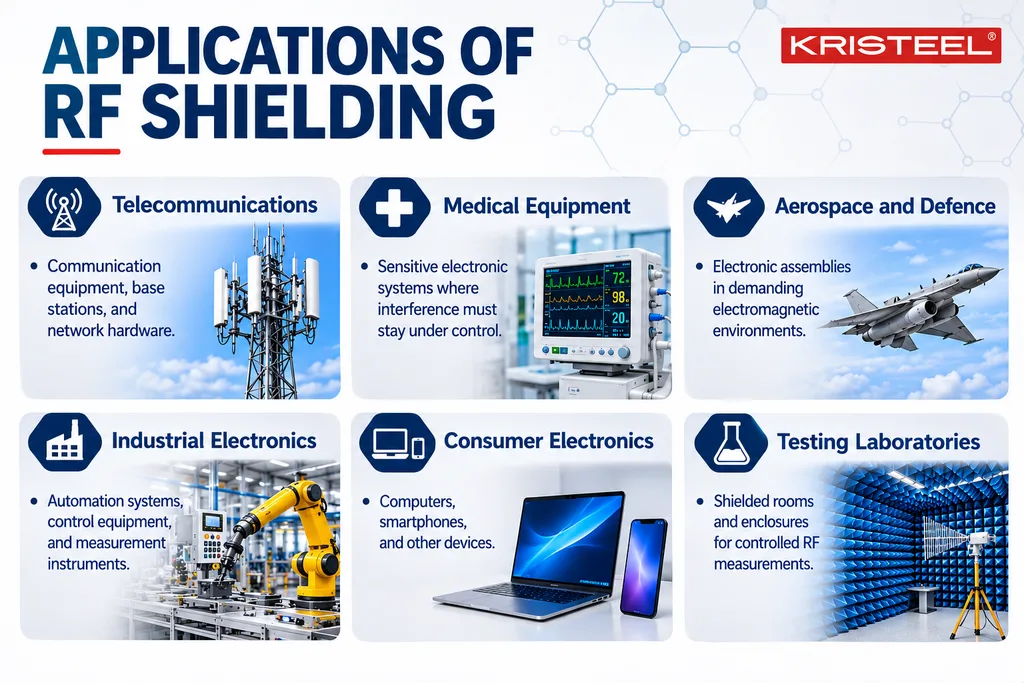
- Telecommunications: Communication equipment, base stations, and network hardware.
- Medical equipment: Sensitive electronic systems where interference must stay under control.
- Aerospace and defence: Electronic assemblies in demanding electromagnetic environments.
- Industrial electronics: Automation systems, control equipment, and measurement instruments.
- Consumer electronics: Computers, smartphones, and other devices.
- Testing laboratories: Shielded rooms and enclosures for controlled RF measurements.
RF shielding is also used in white goods, office automation equipment, and train control and propulsion systems. RF shield manufacturers supply shielding components for these applications, with material and design selected according to frequency and shielding requirements. At Kristeel, we supply these components for various applications.
Materials Used for RF Shielding
Material choice depends on conductivity, magnetic properties, weight, corrosion resistance, cost, and frequency range. No single material wins every application.
- Tin-plated steel: A low-cost option that works from the kHz range into the lower GHz range. Carbon steel adds low-frequency magnetic shielding, and the tin plating protects against rust and gives a solderable surface. We blank it for large quantities.
- Nickel silver (alloys 770, 752, 757): It resists corrosion without post-plating and works from the mid-kHz range into the GHz range. With a permeability of 1, it suits MRI-related uses. We use photochemical machining for quantities up to 50,000 units and recommend a press tool beyond that.
- Copper and brass: Copper provides high electrical conductivity and strong RF attenuation, but its higher material cost can make brass or plated alternatives more economical for some applications. Tin-plated brass keeps costs down for prototypes and production.
- Aluminium: It delivers about 60% of copper’s conductivity at low weight, but it needs attention to galvanic corrosion, oxidation, and poor solderability.
Seams, ventilation openings, connectors, and enclosure construction can matter as much as the base metal.
How to Choose the Right RF Shielding Solution
- Identify the frequencies and sources of interference to control.
- Set the required shielding effectiveness and applicable standards.
- Consider enclosure dimensions, openings, cable connections, ventilation, and grounding.
- Evaluate material compatibility, installation needs, and operating conditions.
- Test the complete assembly to confirm performance.
Conclusion
RF shielding protects electronic systems by blocking unwanted radio frequency energy, whether through metal enclosures, foils, coatings, or gaskets. Effective shielding needs suitable materials and careful design, from seams to grounding. Done well, it improves electromagnetic compatibility and protects sensitive equipment. If you need help specifying a shield, our team at Kristeel can discuss RF shielding solutions for your project.